A Vegetarian's Guide To Japan: 12 Days In Kyoto, Hakone, Mt. Fuji & Tokyo
Our 12-day Japan route, eating mostly vegetarian: where we stayed, the ramen and gyoza to find, Fuji on a clear day, and what we paid to get around.

We may be compensated when you click on links from one or more of our advertising partners. Recommendations and opinions are ours alone. See our Advertiser Policy for more details.
Twelve days, three bases, one very shy volcano, and more convenience-store desserts than I'd like to admit. We flew Cathay Pacific from Mumbai to Osaka through Hong Kong, spent five days in Kyoto, two nights in Hakone, then finished with five days in Tokyo.
Japan was the trip we kept saying we'd do "next year". This time we actually booked it. I expected temples, ramen and spotless trains. I got all three, plus a deep, possibly unhealthy relationship with 7-Eleven and Lawson.
We ate mostly vegetarian, and Japan takes a little homework for that, because dashi sneaks into everything. Japan's national tourism organisation says plenty of dishes carry hidden meat or bonito flakes, and that dashi, a fish stock, turns up in things as innocent-looking as natto sauce. Its vegetarian guide suggests carrying a card in Japanese that says no meat, no seafood and no dashi. But it's very doable. Some of the best meals of the trip were vegan ramen and vegetable gyoza, and I flag every veggie-friendly spot below. Where a dish in a photo looks like meat, it's mock meat. If that's how you eat, here are the airlines with the best vegetarian food too.
The Route
The shape of the trip is simple. Fly into Osaka, go straight to Kyoto, then work east by train: Hakone for the lake and the hot springs, then Tokyo to finish, with day trips to Nara, Osaka and Mt. Fuji along the way. Trains did nearly all the work.
- Mumbai to Osaka, via Hong Kong on Cathay Pacific
- Kyoto, 4 nights, with day trips to Nara and Osaka
- Hakone, 2 nights, by Shinkansen from Kyoto
- Tokyo, 4 nights, with a day trip to Lake Kawaguchi for Mt. Fuji
- Home from Narita
Getting There
We flew Cathay Pacific from Mumbai to Osaka, with a layover in Hong Kong. Hong Kong is one of the nicer airports to kill a few hours in, and the connection was painless. Cathay's connection lands at Kansai International Airport, Osaka's international airport. If you're still choosing flights, here's the best way to fly to Tokyo, and how to book ANA award tickets to Japan with points.
We landed in Osaka and headed straight to Kyoto, our first base. The simplest way to Kyoto is JR West's Haruka limited express, which runs direct from Kansai Airport. Visitors on a foreign passport can buy a discounted one-way ticket to Kyoto for 2,700 yen. Osaka itself we saved for a day trip later in the week.
If you hold an Indian passport, you'll need a visa. Japan's eVISA is open to residents of India, but you apply through VFS, the embassy's accredited agency, not on the eVISA site directly. It covers a single-entry tourist stay of up to 90 days, and the Embassy of Japan in India lists the fee at 500 rupees plus the VFS service fee. At the airport, you show the visa issuance notice live on your phone: a screenshot or a printout isn't accepted.
Kyoto
Kyoto got the most time of anywhere on this trip, and it earned it. Shrines, sake, deer, geishas, bamboo, and a surprising amount of excellent vegetarian ramen. We stayed four nights and used it as a base for Nara and Osaka too.
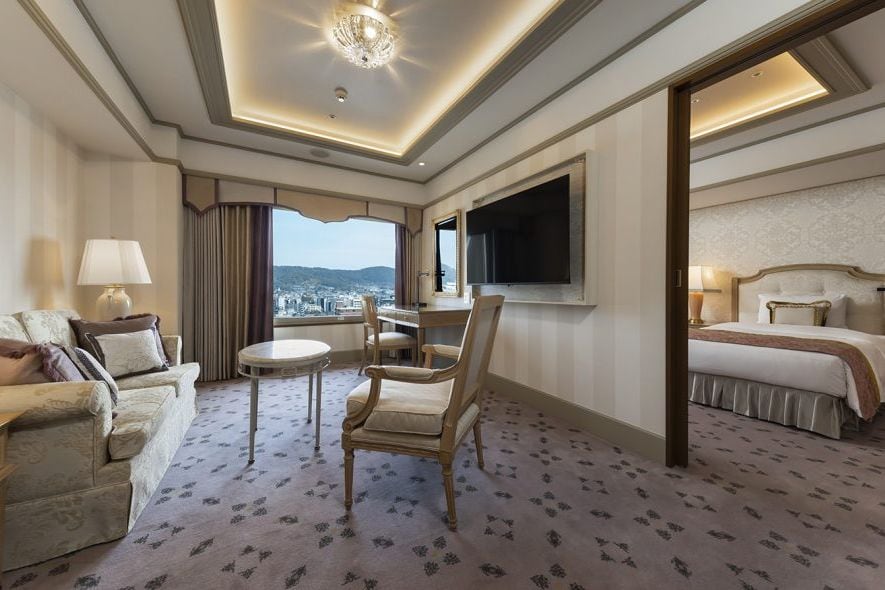
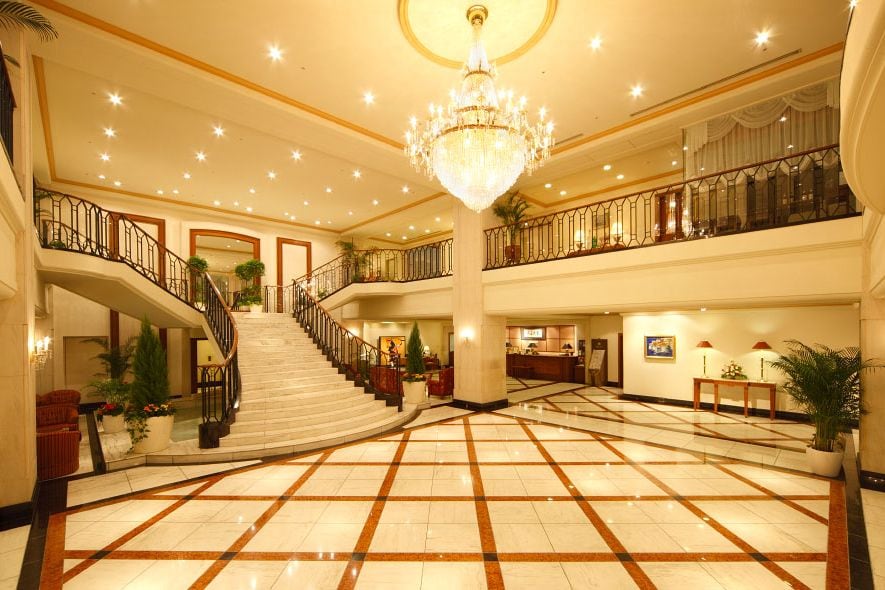
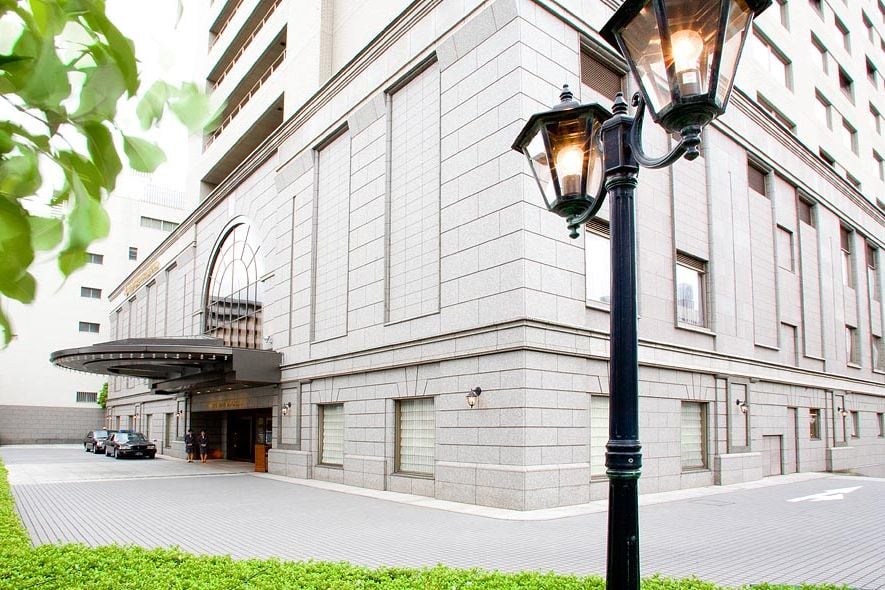
Hotel Nikko Princess Kyoto
Shimogyo ward, a 3-minute walk from Shijo subway station. Four nights.
We stayed at the Hotel Nikko Princess, and it was a good hotel: comfortable, easy and well run. It's about 15 minutes from the centre, which suited us. The hotel is a 3-minute walk from exit 5 of Shijo subway station, which made getting around easy, and its Superior Floor twins are 36 to 38 square metres, roomy by Japanese standards.
It's not a luxury property. If you want to go up a level in Kyoto, read our piece on the Park Hyatt Kyoto, and here's every luxury hotel brand ranked.
Day 1: Nishiki Market And A First Bowl Of Ramen
We eased in with Nishiki Market, which is basically a long, covered corridor of things you want to eat. It runs 390 metres, it has been trading for around 400 years, and locals call it Kyoto's kitchen. We grazed our way down it.
- Saryo Suisen, for hojicha, the roasted green tea. Ours came iced, as a latte. It's an acquired taste, but worth a try.
- Truffle Donut, where the lemon donut was very good. Lemon in a dessert is an instant win with us at Travel Season, so if you only have room for one donut, make it this one.
- koe donuts, where the donuts weren't that great but the space is very cool. The building is by the architect Kengo Kuma. Worth a pop-in.


Dinner was at Kyoto Engine Ramen. They had two or three vegetarian options, and all of them were very good. A strong start.
Day 2: Sake, Kimonos And A Thousand Torii Gates
We started in Fushimi, Kyoto's old sake district, at the Gekkeikan Okura Sake Museum. You learn how sake is made, and then, crucially, you get to taste it. Entry is 600 yen, and anyone 20 or over gets three sake tastings and a souvenir. It's a stunning experience. The attention the Japanese pay to every detail is a reality check on how well things can be done. Do visit.

On the walk from the station to the museum, we stopped for local sweets at Fushimi Surugaya (伏見駿河屋), an old confectioner about 500 metres from Chushojima Station.

Then it was on to Fushimi Inari Taisha, the shrine with the tunnels of orange torii gates. It's the head shrine of some 30,000 Inari shrines across Japan, and around 10,000 torii line the paths up Mount Inari. The full loop to the top, 233 metres up, takes two to three hours. We rented kimonos and went to take photos among the gates. Kimono rental shops are easy to find close to the shrine. Cheesy? Completely. Worth it? Also completely. Apple may have made orange the colour of the year with the iPhone 17 Pro, but the bright orange of the gates against the green of the mountain is something else.


The walk up to the shrine is lined with street food. We tried cucumber pickles, snacks from Itohken (果菓 伊藤軒), and a bowl of vegetable noodles. Itohken is a confectioner founded in 1864, and its shop on the shrine approach sells fruit and wagashi on a skewer.
This was also the day 7-Eleven won us over. The iced coffee comes as a cup of ice with the coffee on the side, and the Kit Kat flavours are a sport of their own. We found sake-flavoured ones. We also had very good egg sandos at Niko and..., a cafe and lifestyle shop where we did some shopping too.


Dinner was at Moon and Back Ramen Bar, by Nishiki Market. The ramen was delicious, and so was the eggplant dish.

Day 3: Deer In Nara, Geishas In Pontocho
Nara makes an easy day trip from Kyoto. We went for the deer park, where the deer are polite, bowing, and absolutely relentless about crackers. The deer are a national natural monument, and the Nara Deer Preservation Foundation counts around 1,700 of them. Nara is a big draw: the city welcomed about 16 million visitors in 2025, according to Nara City, and travellers love it. On Tripadvisor, Nara Park is the city's top attraction, rated 4.5 from more than 6,000 reviews, and Todai-ji scores 4.7 from nearly 5,900. Both carry its Best of the Best badge, given to the top 1% of listings.

We had coffee at Cafe Conce and ice cream at Cremia, a soft serve in a cone made of something closer to a biscuit. A different take on the cone: the combination worked, but it didn't leave us needing to go back.

Todai-ji was very pretty. The Great Buddha Hall is, in the temple's own words, the largest wooden structure in the world, and it houses an 8th-century Buddha that is a National Treasure. The hall alone is 800 yen, or 1,200 yen with the museum. You don't need the combined ticket with the museum. The temple itself is the main event. Stunning.

Lunch was at a 7-Eleven. Don't knock it until you've tried it. The egg sando was the best of the trip, and we went home with a basket of finds every time.


Back in Kyoto, we stopped at WAKASA&CO., a blueberry cafe near Shijo Karasuma. It had the yummiest blueberry Swiss roll, and a blueberry salad dressing worth asking about.

Dinner was at Que Pasa, a Mexican place, of all things. A sign on the counter says it best: who would have thought you'd need a burrito all the way in Kyoto? A break from all the amazing Japanese food is recommended, and this is the spot for it.


In the evening we walked down Pontocho Alley. It's a narrow, paved lane of wooden buildings between Sanjo and Shijo, beside the Kamo River, and it comes alive at night. Go around 8 to 8:30pm and you've got a good chance of spotting geishas. We did.

Day 4: Bamboo, Gyoza And Gion
We started at the Arashiyama Bamboo Grove, on the western edge of Kyoto. It's a 10-minute walk from Saga-Arashiyama Station, the path runs through to Nonomiya Shrine, and you can step into it from Tenryu-ji's side gate (JNTO). Nature at its finest.

We grabbed snacks at the miffy sakura bakery, which is as adorable as it sounds, then walked to Tenryu-ji. It was founded in 1339, it's a UNESCO World Heritage Site, and the garden costs 500 yen. It also runs its own Zen vegetarian restaurant, Shigetsu, which is worth knowing about if you eat the way we do.

Lunch was at Chao Chao Gyoza, the Shijo Kawaramachi branch, and it was very good: the best vegetarian gyoza of the trip. Go to that branch: it has a separate English vegetarian menu, with vegetable, tofu and yuba gyoza, and you may need to ask for it. Be prepared to wait in line, but it's worth it.

We had ice cream at THISIS nature, which is traditional and very pretty: ours came topped with flowers that look like hydrangeas. Art that was demolished in three minutes. We also tried red bean mochi from a street stall. It's an acquired taste, and one you can skip.


One honest note. If there's one thing Japan isn't good at, it's coffee. Set your expectations, or do what we did and live on 7-Eleven iced coffee. There are plenty of combinations to keep you happy, and it became our daily pit stop.

We finished the day with a walk around Gion, which Japan's tourism board calls the wellspring of geisha culture. Spotting one is harder than it sounds: National Geographic counted about 161 geiko and 68 maiko across Kyoto's five geisha districts in 2021. If you do see one, Gion's own associations ask that you don't photograph, follow or touch them without permission. We still can't believe we managed to spot some.
Day 5: An Osaka Day Trip
We spent our last Kyoto day on a trip to Osaka. We started at Umeda, which you can skip if you're only there for the day. Dotonbori is the place to be, with lots of street food (mostly not vegetarian, so look carefully) and good shops like Bic Camera. The canal-side strip is right outside Namba Station, lined with giant 3D signs.
Lunch at CoCo Ichibanya was great. It's Japanese curry rice, and you choose your toppings and your spice level. It hit close to home with the spices and the rice. For vegetarians, CoCo Ichibanya also has a vegetarian curry made only with plant-based ingredients, though not every branch serves it, so check before you go. With 1,285 stores in Japan and 218 overseas (CoCo Ichibanya, February 2026), we're clearly not the only fans. A must visit.

For dessert we tried Rikuro's famous Japanese cheesecake. It was good, but maybe not worth the hype. Rikuro has been baking it since 1984. We picked up more sweets at Sweets Terrace, and a bag of Kyoto chilli oil furikake from Ochanokosaisai, which turned out to be the best topping for egg and rice we've had.


We ended the day at Rinku Premium Outlets, which had good deals. It has around 250 stores, across the water from Kansai International Airport.
We never made it to Kiyomizu-dera or the Golden Pavilion. Kyoto deserves even more time than we gave it.
Hakone
Hakone sits around Lake Ashi, in hot-spring country between Kyoto and Tokyo. It was meant to be our slow, scenic break between two big cities. The weather had other ideas, but we adapted, mostly by shopping.
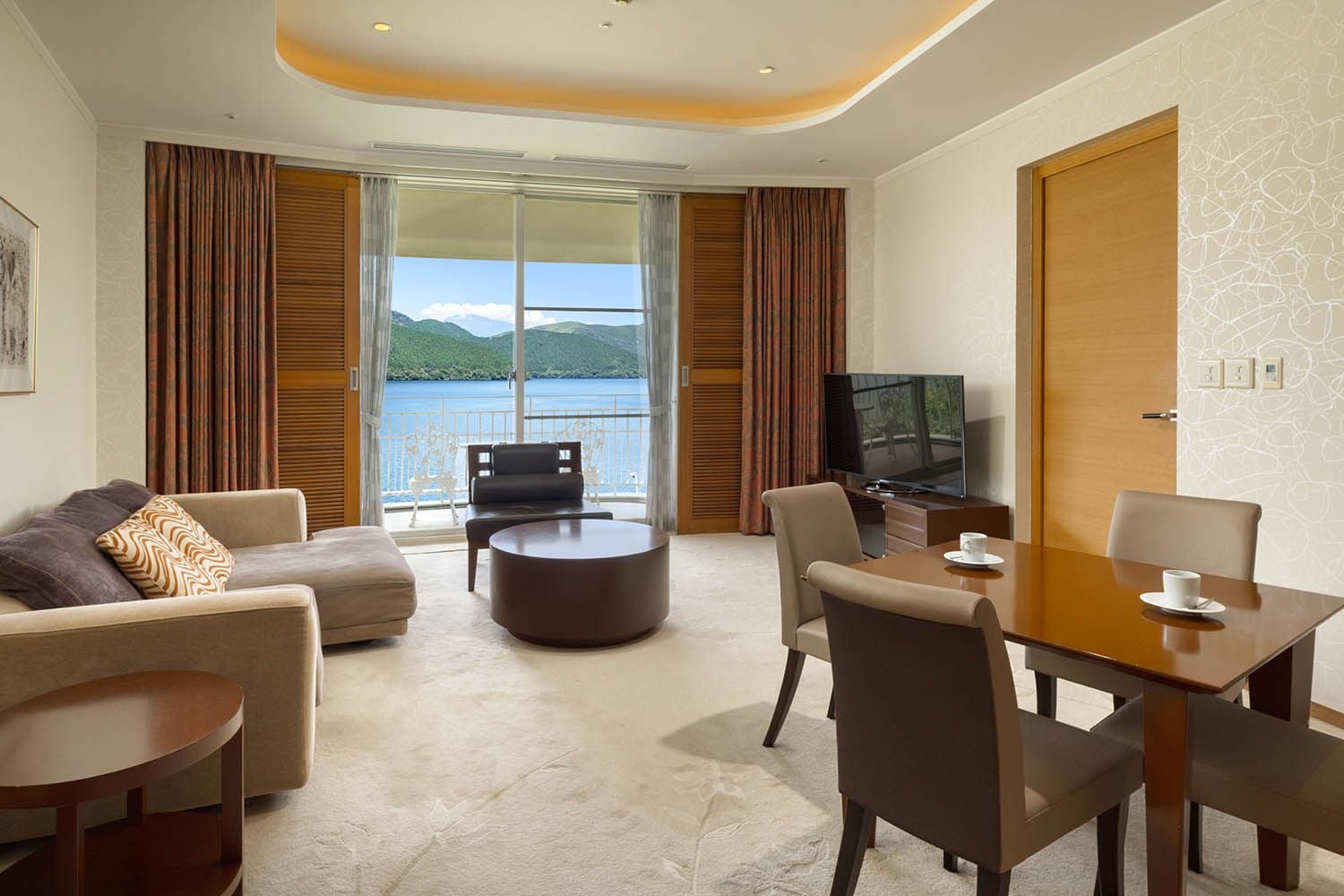
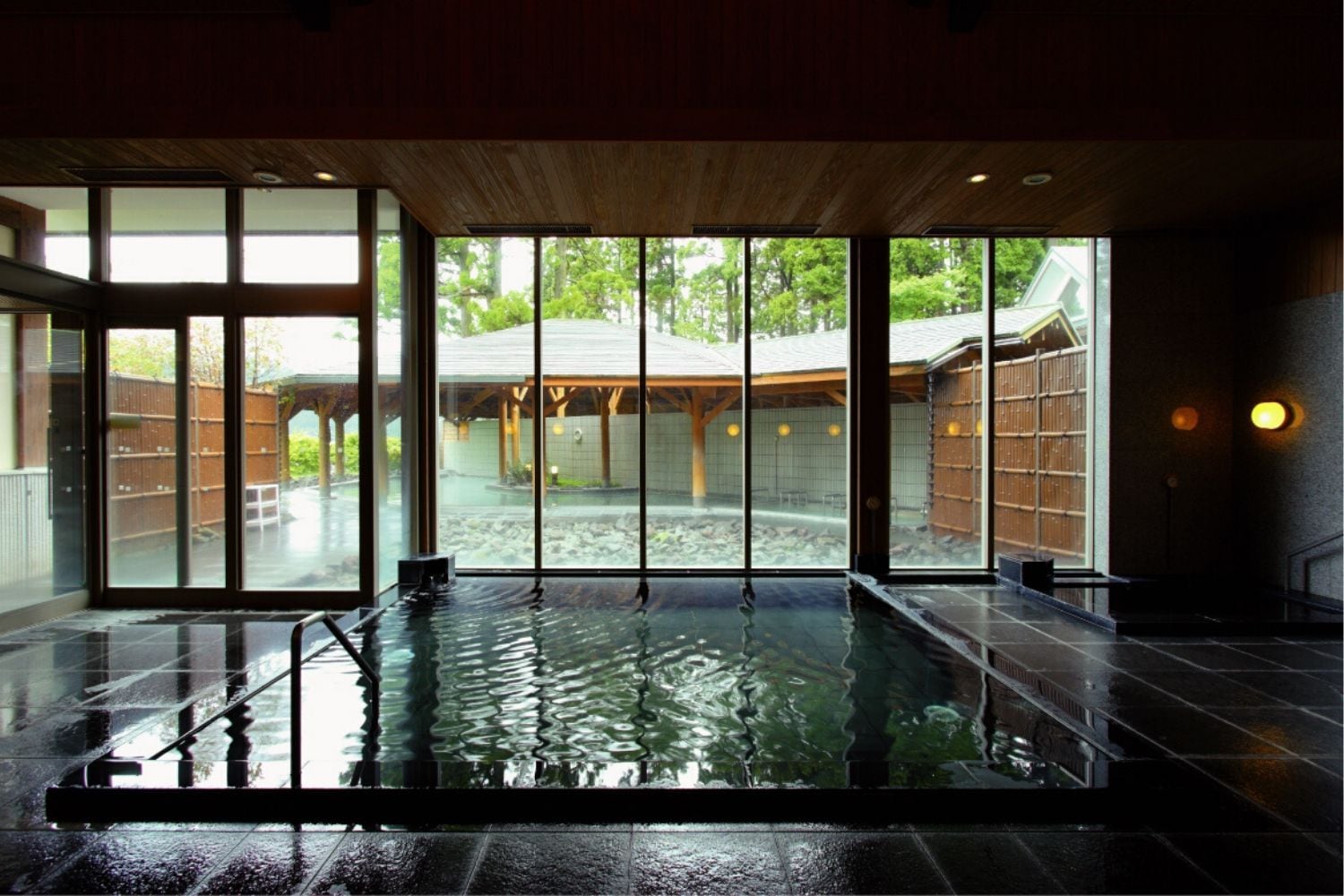
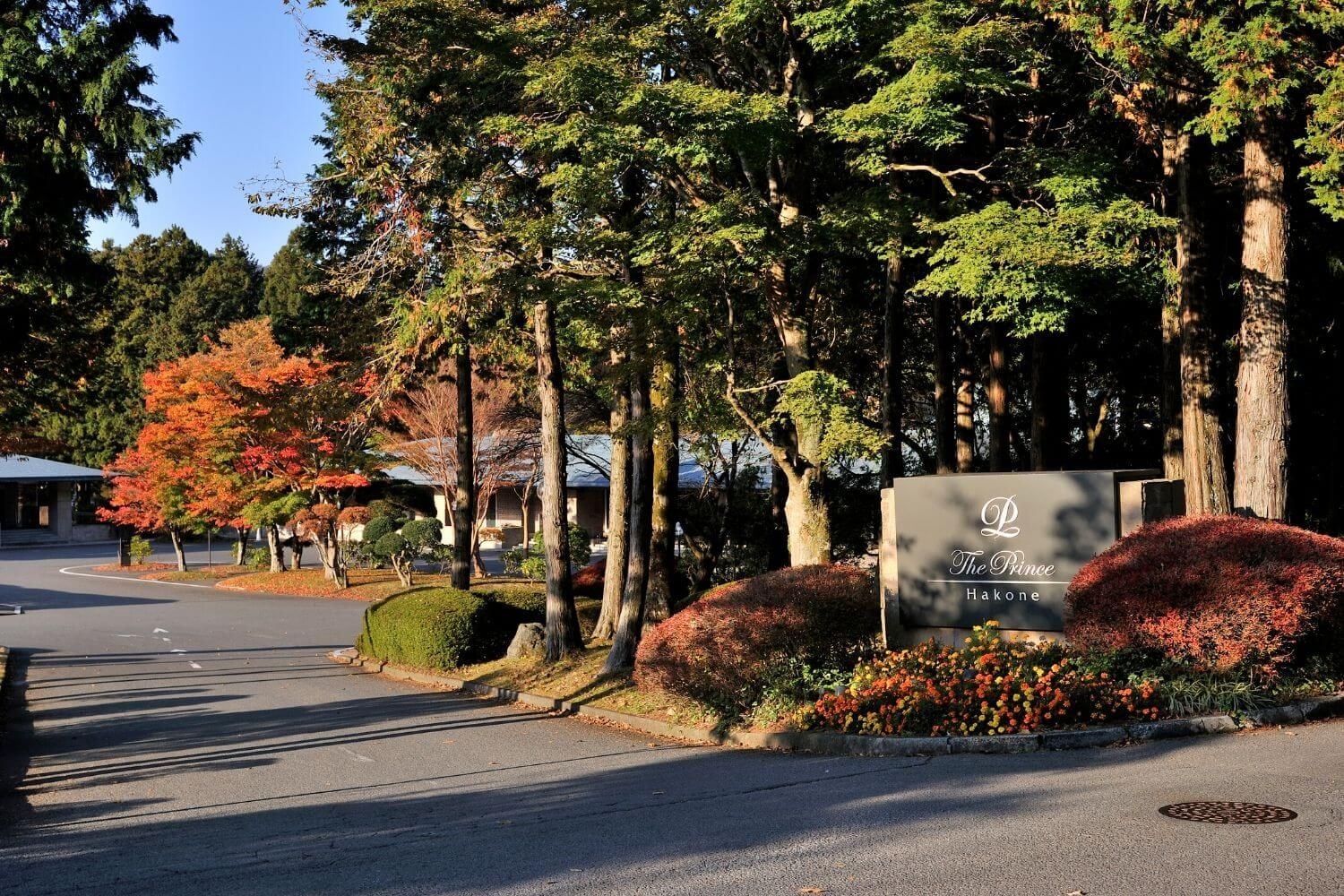
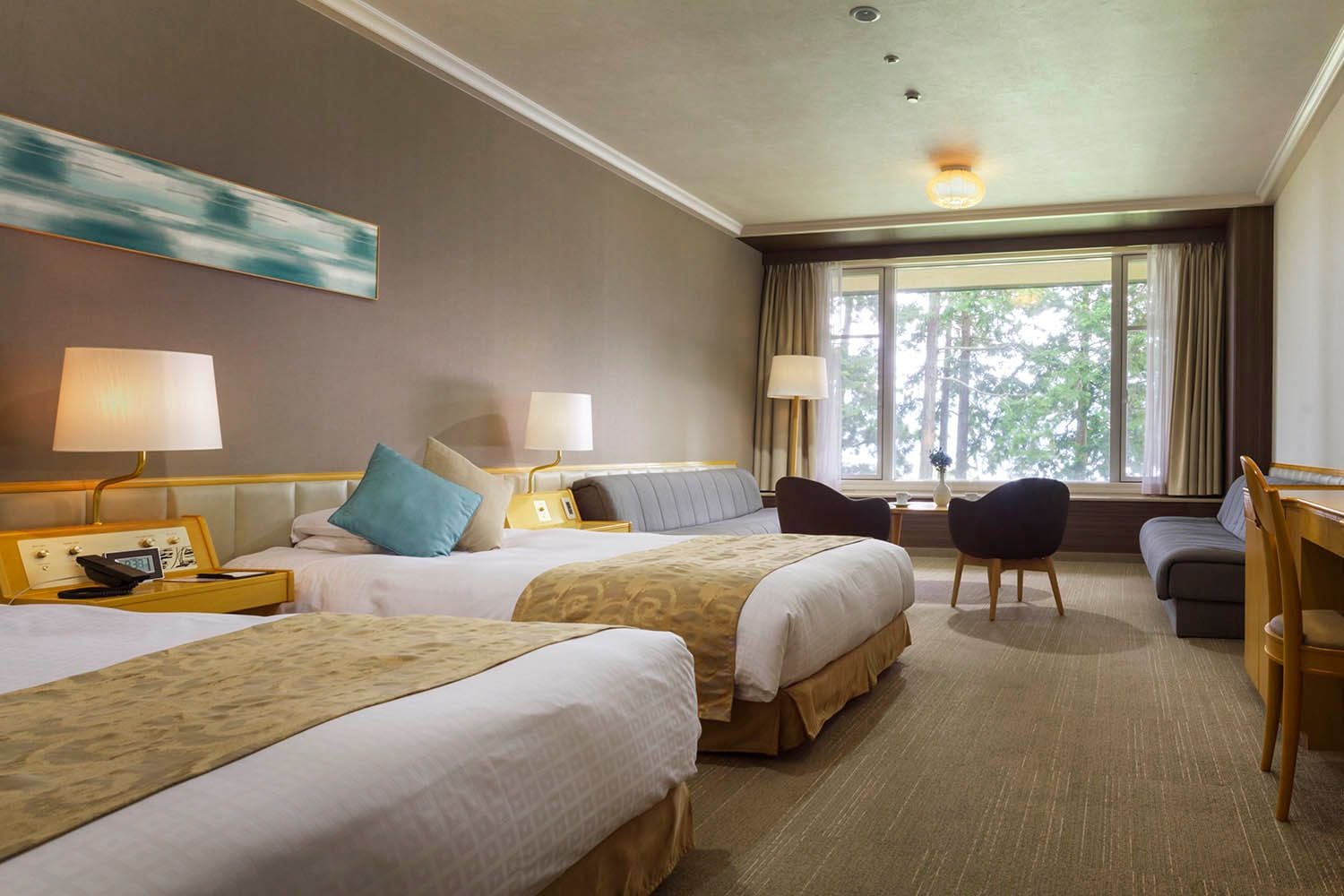
The Prince Hakone Lake Ashinoko
On Lake Ashi at Moto-Hakone, with its own onsen. Two nights.
We stayed at The Prince Hakone Lake Ashinoko, and it was very good. It sits right by Lake Ashi, and the building was designed by the architect Togo Murano. The onsen was the best part: we used it every single night. It's called Hakone Kohan-no-yu, and it's open 6:00 to 10:30 and 13:00 to 23:00. One thing to know: the hotel says guests with tattoos may be turned away. There's also a free guest shuttle from the west exit of Odawara Station, which is where the Shinkansen drops you.
One regret: we didn't stay in a traditional ryokan, the Japanese inns with tatami rooms and their own baths. If you can, do.
Day 6: Shinkansen, A Pirate Ship And Lawson's Finest
We took the Shinkansen from Kyoto towards Hakone. In Hakone, we picked up a macadamia and chocolate bun at Hakone Bakery.

The hotel shuttle dropped us at Moto-Hakone, and from there we did the Lake Ashi cruise on the pirate ship. It sounds gimmicky, but it's worth doing. The ships run between Togendai, Hakone-machi and Moto-Hakone, about 25 to 35 minutes one way, and the Hakone Freepass covers them.
Dinner was at La Terrazza Ashinoko, an Italian place by the lake with good Neapolitan pizza. We followed it with dessert at SUN SAN D, a Hakone shop that makes butter sandwich biscuits, then another dessert from Lawson, because we were on holiday.


At Lawson, look out for the lemon stick cake and the chocolate ganache truffle with cream filling. The truffle was very, very good. We ended the night in the hotel onsen.
Day 7: When It Rains, Go To The Outlets
The weather was terrible, so we went to Gotemba Premium Outlets instead. There were great deals and a huge range of brands, so no complaints. It has 290 stores, with Mt. Fuji in view on a clear day. It was not a clear day.
Lunch was at Shake Shack, followed by gelato at gelato pique cafe and a snack at Eggs 'n Things, where the pancakes come under a mountain of whipped cream. Then it was back for another evening in the onsen.


Tokyo
After the quiet of Hakone, Tokyo hits like a double espresso. We gave it the last five days, with one of them spent chasing Mt. Fuji.
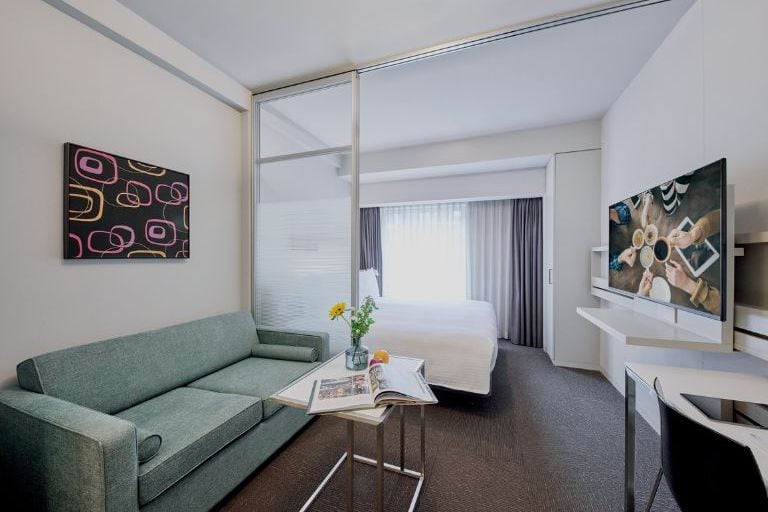
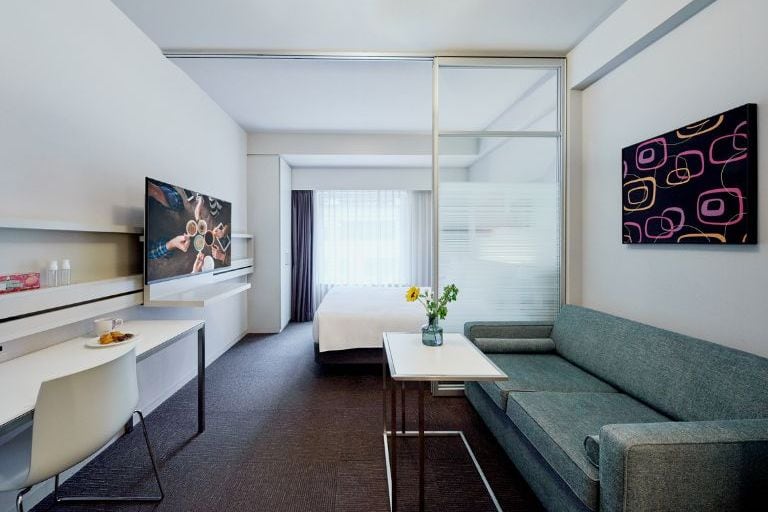
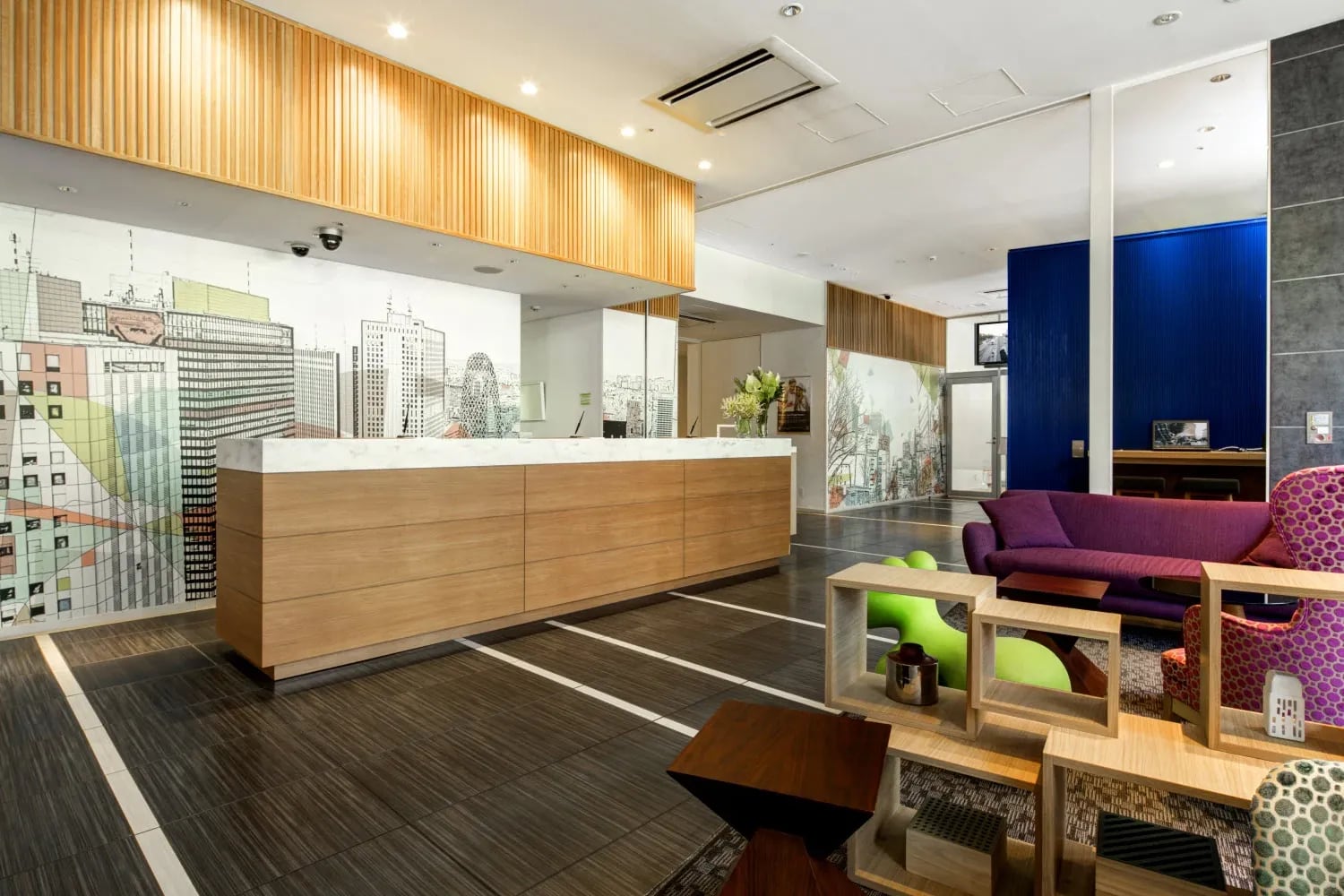
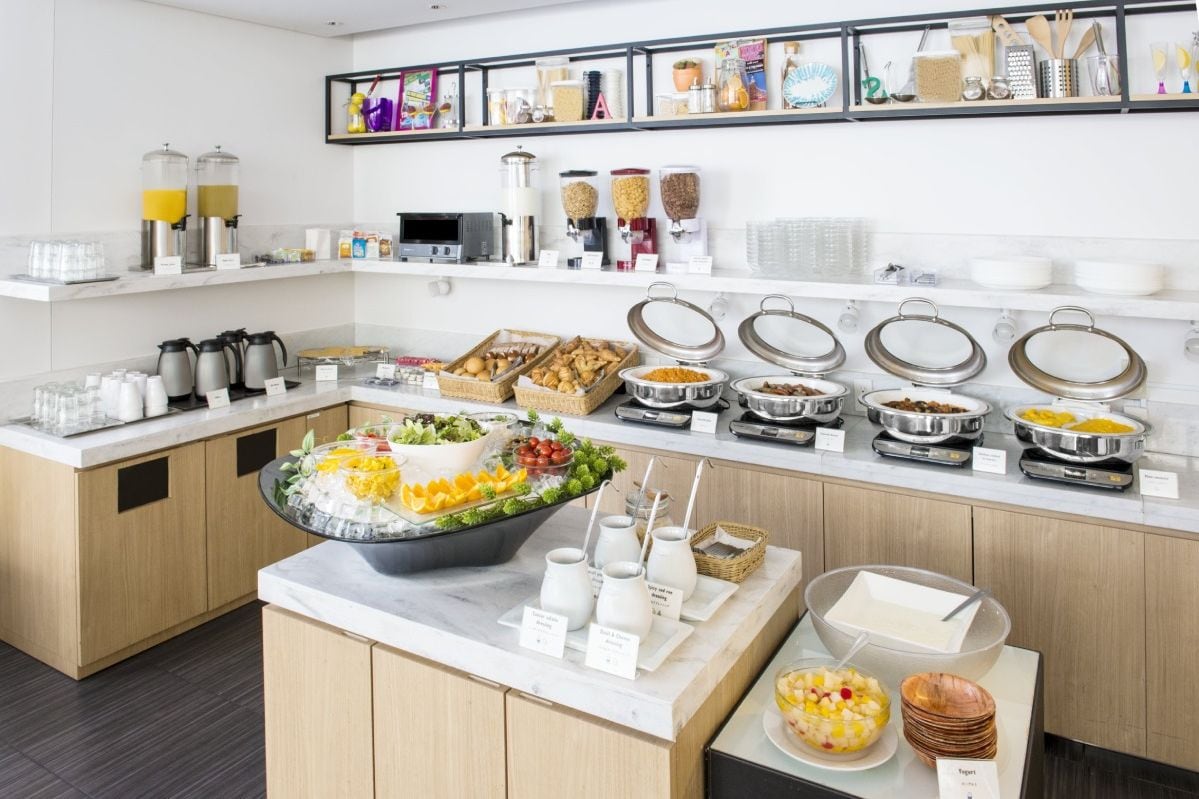
Citadines Shinjuku Tokyo
Shinjuku, a 5-minute walk from Shinjuku-gyoemmae station. Four nights.
Our Tokyo base for four nights was Citadines Shinjuku, an apartment hotel. The rooms have a kitchenette with a stove, a microwave and cookware, which is handy if you eat vegetarian and want an easy breakfast, and there's a coin laundry on the ground floor for the back half of a long trip. Studios are 25 square metres.
It's a 5-minute walk from Shinjuku-gyoemmae station on the Marunouchi line, and from Shinjuku Gyoen, the big park. Shinjuku is also where the Fuji buses and the airport bus leave from, so it worked well as a base for the last leg.
Day 8: Owakudani In The Morning, Shibuya By Night
We woke up to clear skies at last, so before leaving Hakone we took the ropeway up to Owakudani. The black eggs are boiled there for about an hour in 80°C spring water. Legend says each one adds seven years to your life. We tried the famous black egg. It's an acquired taste, and I didn't like it at all.


Then we made our way to Tokyo. If you're doing the same, the Odakyu Romancecar runs direct from Hakone-Yumoto to Shinjuku in about 80 minutes. We arrived and went straight to Shibuya Crossing and the Hachiko statue, because you have to. At its busiest, an estimated 1,000 to 2,500 people cross every two minutes. Hachiko was an Akita who kept coming back to the station to wait for his owner every day for nine years after the owner died.

Right as you exit Shibuya station, head into the Foodshow food hall and find Carvaan's Lebanese dips. Very good, and a welcome change of flavour. While you're at it, try Iyoshi Cola, a Tokyo craft cola. It's very good too. Iyoshi Cola was started in 2018 by the grandson of a kampo herbal medicine maker. You must buy one.

Dinner was at Izakaya Masaka, an izakaya, which is a Japanese pub that serves small plates. The chilli tofu was delicious, and the shumai and gyoza were good, though we had better elsewhere on the trip. It's a fully vegan izakaya in the basement of Shibuya Parco.

Day 9: Mt. Fuji Day
This was the day I'd been waiting for. Two things before you go.
- Check the visibility. We used fuji-san.info, which publishes a daily forecast of how well Fuji will show. Please go on a very clear day, because Fuji is famously shy.
- Book the bus in advance. We took the train from Tokyo, but the highway bus is cheaper, so next time that's what I'd do. The Fujikyu highway bus from Busta Shinjuku takes about 1 hour 45 minutes and costs 2,000 yen booked online. The Fuji Excursion train is reserved seats only, takes 1 hour 53 minutes at its fastest, and costs 4,200 yen one way.
We got off at Kawaguchiko station and walked about 30 minutes to Lake Kawaguchi. It's the easiest of the Fuji Five Lakes to reach from Tokyo, and on a still, clear day Fuji is mirrored in the water. It's a very good spot: peaceful and not too touristy. Carry some food so you can picnic with the view.
Right outside the park is a small cafe called Milky Way, with the best crepes. For dessert, go to KAWAGUCHIKO Creamery, next to the station, for soft serve made with milk from farms at the foot of Fuji.


An alternative viewpoint is Shimoyoshida, where the Chureito Pagoda frames Fuji, but it's a climb of 398 steps up to the observation deck, about 25 minutes' walk from Shimoyoshida Station.
Back in Tokyo, we had dinner at T's Tantan in Tokyo Station, a vegan ramen shop, and it was very good. It's on B1 of Gransta Tokyo, outside the ticket gates, so you don't need a platform ticket to eat there. Everything is vegan, with no meat, seafood, dairy or eggs.

We picked up caramel biscuits at Caramel Wich (very good), walked around Ginza at night, and grabbed a snack at Dean & DeLuca. Both are must visits.

Day 10: Asakusa And A Day In Ginza
We walked down Nakamise-dori in Asakusa, one of the oldest shopping streets in Japan. It dates back to the Edo era, runs about 250 metres with 89 shops, and it's full of good snacks. Senso-ji sits at the end of it, so the walk builds up nicely to the temple. Founded in 628, Senso-ji is the oldest temple in Tokyo. Nearby, we tried a Korean cream cheese bun at Butter Juwer.

We spent the rest of the day in Ginza. Uniqlo was alright, but GU was very good. Lunch was ramen at Kyushu Jangara Ginza, which was very good. It has a dark soy vegan ramen on the menu, and we loved that. Dinner was good cafe food at Ain Soph. Ginza, a 100% vegan restaurant and patisserie.


Day 11: Tsukiji And Omotesando
We got to the Tsukiji Outer Market around 8am, walked around the fish stalls first, then moved on to the food stalls. The wholesale market itself has moved elsewhere in Tokyo, but the shops around it stayed on as the Outer Market. Things to try:
- Tanghulu, fruit on a stick in a crackly sugar shell
- Grapefruit soda
- Strawberry smoothie with soft serve on top
From there we walked to Omotesando, Tokyo's high-end shopping street. Japan's tourism board calls the area Tokyo's Champs-Élysées. It's the best place to buy Onitsukas, because Onitsuka Tiger, the NIPPON MADE line and the kids' range are all in one area. The Onitsuka Tiger store and the separate NIPPON MADE store are a short walk apart on Jingumae.
We had a snack at MUJI Diner, in the basement of Muji's Ginza flagship. It was fine, nothing more. Dinner was at the Caviar House & Prunier sandwich house in Ginza. Everything else was shut, so I had a tomato mozzarella sandwich, and it was alright.

Day 12: Ueno, Shibuya And A Don Quijote Haul
We spent the morning at Ueno Park and the zoo, which was good. Ueno Zoo opened in 1882 as the first zoo in Japan. Entry is 600 yen, and it's closed on Mondays.

Then it was back to Shibuya for Loft and MEGA Don Quijote, the giant discount store that sells everything. The Shibuya store is open 24 hours. Here's what came home with us:
- Fino hair mask
- &honey shampoo, conditioner and hair oil
- Rice face masks
- Kit Kats and Pocky
- Lotte chocolate-covered macadamias, almonds and pistachios
- Ramen, a lot of it
- Cute knick-knacks for the house

A word on tax-free shopping, because it works as a refund in Japan now. You pay the full price at the till, then customs checks your passport and the goods when you leave Japan, within 90 days, and the tax comes back to you. It applies when you spend 5,000 yen or more, before tax, in one store on one day. Keep those purchases in your hand luggage, because customs can't check anything in a checked bag. The Japan Tourism Agency has the details.
Our last dinner was at Vegan Bistro Jangara in Harajuku, with very good rice, ramen and gyoza. It's all vegan, and it's run by the same company as Kyushu Jangara. It was the perfect way to sign off.

Getting Around
Japanese transport is as good as everyone says. Here's how we got around, with fares per adult:
- IC card: We bought an ICOCA card in Kyoto. Suica works just the same. Both carry a 500 yen deposit, refunded when you hand the card back. Visitors can also get a Welcome Suica, with no deposit, valid for 28 days.
- 72-hour Tokyo subway pass: Our ICOCA balance was running low by the time we reached Tokyo, so we bought a 72-hour pass with unlimited rides: the Tokyo Subway Ticket, which covers every Tokyo Metro and Toei subway line but not JR. It costs 2,000 yen, and there are 24-hour and 48-hour versions too.
- Kyoto to Hakone: the Shinkansen to Odawara, then on to Hakone, about 12,000 yen in all.
- Hakone to Tokyo: about 3,500 yen.
- Tokyo to Narita Airport: the Airport Limousine bus from the Shinjuku bus terminal, 3,600 yen.
What 12 Days In Japan Costs
Here's an estimate of what this route costs per person at today's prices, built from the fares, entry fees and menu prices above. Treat it as a guide, not a quote.
- Getting around, about 34,000 yen: the Haruka from Kansai Airport to Kyoto (2,700), a return trip to Nara on the Kintetsu limited express (about 2,600), the Shinkansen to Hakone (about 12,000), the ropeway at Owakudani (2,000 one way) and the pirate ship (1,700), on to Tokyo (about 3,500), the bus to Fuji and back booked online (4,000), the 72-hour subway pass (2,000) and the airport bus to Narita (3,600). Add a little on your IC card for local trains in Kyoto and Osaka.
- Sights, about 2,500 yen: Gekkeikan (600), Todai-ji (800), Tenryu-ji's garden (500) and Ueno Zoo (600). Fushimi Inari, Nara Park, the bamboo grove, Pontocho, Nakamise and Tsukiji cost nothing to walk.
- Food, about 4,000 to 5,500 yen a day: a 7-Eleven egg sando (about 300) and iced coffee (about 140) for breakfast, a bowl of vegan ramen at lunch or dinner (1,300 at T's Tantan, 1,450 at Vegan Bistro Jangara), a vegetarian curry at CoCo Ichibanya (683), a main at Ain Soph. Ginza (2,200 to 2,400) on a nicer night, plus dessert, because there's always dessert. Over 12 days that's roughly 48,000 to 66,000 yen.
- Hotels, about 104,000 to 413,000 yen each for two sharing: Tripadvisor puts a standard room, per night, at 16,401 to 85,669 yen at Hotel Nikko Princess Kyoto, 26,274 to 82,325 yen at The Prince Hakone Lake Ashinoko and 22,452 to 79,618 yen at Citadines Shinjuku Tokyo (Tripadvisor, November 2026). The range is wide because it runs from the quietest weeks to the busiest. For our 10 nights, 4 in Kyoto, 2 in Hakone and 4 in Tokyo, that comes to about 208,000 to 826,000 yen per room.
Two city taxes go on top of the room rate. Kyoto charges an accommodation tax per person per night that rises with the room price: 400 yen for a room-only rate of 6,000 to 20,000 yen, and 1,000 yen from 20,000 to 50,000 yen (City of Kyoto). Tokyo charges 100 yen per person per night on rates from 10,000 to 15,000 yen and 200 yen above that, moving to a flat 3% from 1 April 2027 (Tokyo Metropolitan Government).
What We Didn't Get To
Twelve days sounds like a lot until you're there. Next time, I'd make room for:
- Kiyomizu-dera in Kyoto, founded more than 1,250 years ago
- The Golden Pavilion (Kinkaku-ji) in Kyoto, a UNESCO World Heritage Site
- A night in a traditional ryokan in Hakone
More For Japan
- The Best Way To Fly To Tokyo
- How To Book ANA Award Tickets To Japan
- Japan Airlines First Class From Seoul To Tokyo
- Park Hyatt Tokyo
- A Vegetarian's Guide To Vietnam: 12 Days In Da Nang, Hoi An, Hanoi, Ha Long Bay & Saigon
Is 12 Days In Japan Enough?
It's enough to see the big three and fall hard for the country. It's not enough to stop thinking about going back.
The route works. Kyoto gives you the temples and the food, Hakone slows you down (weather permitting), and Tokyo sends you home with a Don Quijote haul. Skip Umeda on an Osaka day trip, go to Pontocho after 8pm, and hold your Fuji day for the clearest forecast of the trip.
My highlights: kimonos at Fushimi Inari, geisha-spotting in Pontocho, gyoza at Chao Chao, a picnic by Lake Kawaguchi with Fuji finally showing off, and that Lawson ganache truffle. If you eat vegetarian, Japan takes a bit of research, but it rewards you for it. Go hungry.


